


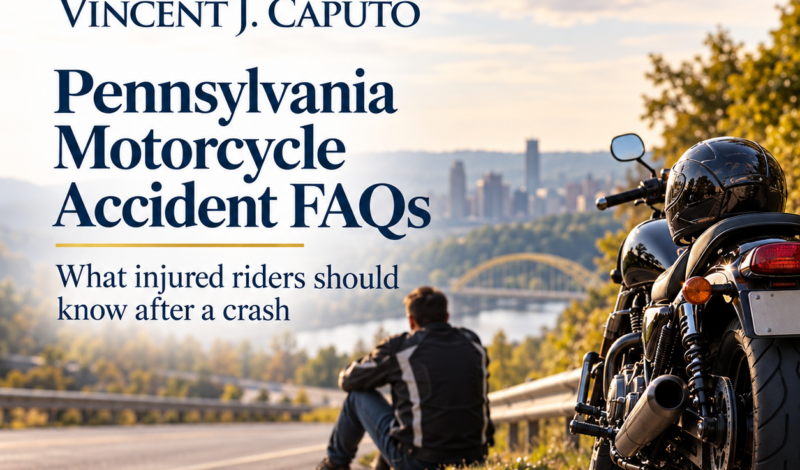

Understanding your rights, insurance coverage, and potential compensation after a motorcycle crash in Pennsylvania.
A motorcycle ride through Chester County or the surrounding Pennsylvania countryside can change in an instant when another driver makes an unsafe turn, changes lanes without looking, or fails to yield.
Unlike drivers protected by the structure of a passenger vehicle, motorcyclists face a greater risk of serious injuries when a collision occurs. Broken bones, head injuries, road rash, spinal injuries, and long-term physical limitations can leave riders facing overwhelming medical bills and uncertainty about their futures.
But the physical consequences are only part of the story.
What happens when the other driver says they never saw you? Does it matter if you weren’t wearing a helmet? And does Pennsylvania’s limited-tort insurance system affect your ability to recover compensation?
These are important questions, and the answers aren’t always as straightforward as people assume.
At the Law Office of Vincent J. Caputo, we believe injured motorcyclists deserve clear information about their legal rights and options.
Here are six important things to understand after a motorcycle accident in Pennsylvania.
1. What You Do Immediately After a Motorcycle Accident Can Affect Your Claim
In the moments following a collision, your health and safety should always come first.
Call 911, request medical attention, and make sure the accident is reported to law enforcement. Even if you initially feel well enough to walk away, some injuries may not be immediately apparent.
If you are physically able to do so safely, documenting the accident scene can also make a significant difference.
Important evidence may include:
- Photographs of the motorcycle and other vehicles involved
- Damage to helmets, jackets, boots, and other riding equipment
- Skid marks, debris, and road conditions
- Traffic signals, signs, and intersection layouts
- Contact information for witnesses
- Police reports and medical documentation
Why does this matter?
Motorcycle accident claims often involve disputes about how a crash occurred. Evidence gathered soon after the collision may help clarify who had the right of way, whether another driver was distracted, and whether traffic laws were violated.
Preserve damaged riding equipment rather than immediately repairing or discarding it. What appears to be ordinary accident debris may become relevant evidence.
2. Not Wearing a Motorcycle Helmet Doesn’t Automatically Eliminate Your Right to Compensation
One of the most misunderstood aspects of Pennsylvania motorcycle accident law concerns helmet use.
Pennsylvania does not require every adult motorcyclist to wear a helmet.
Under Pennsylvania law, certain riders who are at least 21 years old may legally operate a motorcycle without a helmet if they have held the appropriate motorcycle license for at least two full calendar years or completed an approved motorcycle safety course. Other exemptions also exist.
Approved eye protection generally remains mandatory.
But what happens if an accident occurs and the rider wasn’t wearing a helmet?
The absence of a helmet does not automatically mean the motorcyclist caused the collision or has no right to pursue compensation.
There are two separate questions to consider:
Who caused the motorcycle accident?
The actions of the drivers, traffic conditions, and applicable rules of the road help determine responsibility for the crash.
Did the lack of protective equipment contribute to a particular injury?
Depending on the circumstances, helmet use may become part of a dispute about the extent or cause of an injury.
The legal significance of helmet use depends on the facts, available medical evidence, and applicable Pennsylvania law.
A rider should not automatically assume that an insurance company can deny an entire injury claim simply because a helmet was not worn.
3. Pennsylvania’s Limited-Tort Rules Can Be Different for Motorcycle Accidents
Many Pennsylvania drivers are familiar with the choice between full-tort and limited-tort automobile insurance.
Limited tort generally restricts recovery for certain non-economic damages, such as pain and suffering, unless a statutory exception applies or an injury meets the legal threshold for serious injury.
However, motorcycle accident claims can present different legal and insurance questions than ordinary passenger-vehicle collisions.
Pennsylvania law provides special treatment for certain claims involving occupants of vehicles other than private passenger motor vehicles.
This means a limited-tort election on a household automobile policy does not necessarily determine the rights of someone injured while riding a motorcycle.
The answer may depend on:
- Whether the injured person was operating or riding as a passenger on a motorcycle
- The insurance policies and tort selections involved
- The circumstances of the accident
- The nature and severity of the injuries
- Applicable statutory exceptions
Why is this important?
An injured rider may mistakenly believe that compensation for pain and suffering is unavailable because the household’s automobile policy lists limited tort.
That assumption could lead someone to underestimate the value of a legitimate injury claim.
An experienced Pennsylvania personal injury attorney can review the relevant facts and insurance coverage before determining which legal limitations apply.
4. “I Didn’t See the Motorcycle” Is Not a Defense to Negligent Driving
It’s a statement motorcyclists hear far too often after collisions:
“I never saw the motorcycle.”
Motorcycles have a smaller visual profile than passenger vehicles, but drivers still have a responsibility to exercise reasonable care when sharing the road.
A driver who fails to check mirrors, misjudges the distance of an approaching motorcycle, or turns across an oncoming rider’s path may be responsible for the resulting collision.
Common motorcycle accident scenarios include:
Left-turn accidents
A driver turns in front of an approaching motorcycle at an intersection or driveway.
Unsafe lane changes
A driver moves into another lane without adequately checking for surrounding traffic.
Failure-to-yield collisions
A motorist fails to give a motorcycle the right of way when required.
Rear-end accidents
A driver follows too closely or fails to react to a motorcycle slowing or stopping.
Distracted-driving collisions
A driver looking at a phone, navigation system, or another distraction fails to recognize a motorcycle in time.
Determining fault often requires more than accepting either driver’s version of events.
Police reports, witness statements, photographs, video recordings, vehicle damage, and accident reconstruction may help establish what happened.
In Pennsylvania, comparative negligence rules may also affect compensation if more than one person contributed to the collision.
The important point is that failing to notice a motorcycle does not, by itself, excuse a driver’s failure to operate a vehicle safely.
5. A Hit-and-Run Doesn’t Necessarily Mean You Have No Motorcycle Accident Claim
A motorcycle accident becomes especially frustrating when the responsible driver leaves the scene.
Without an identified driver, injured riders may wonder who will pay their medical expenses or compensate them for lost income.
Depending on the available insurance coverage, uninsured-motorist benefits may provide a potential source of compensation.
Pennsylvania law recognizes certain claims involving unidentified vehicles, but reporting and notification requirements are important.
If you are involved in a hit-and-run motorcycle accident:
- Report the collision to law enforcement promptly.
- Seek medical treatment and preserve records.
- Document everything you remember about the fleeing vehicle.
- Identify nearby witnesses and potential surveillance cameras.
- Notify the appropriate insurance company within the applicable deadlines.
- Have the relevant policies reviewed before assuming coverage is unavailable.
Uninsured-motorist coverage is not automatically available in every case, and the applicable policy language matters.
Motorcycle policies and household automobile policies may have different coverage provisions, limitations, and exclusions.
An attorney can help determine which policies may apply and whether a claim can be pursued.
6. Motorcycle Accident Compensation Should Consider More Than Today’s Medical Bills
A serious motorcycle accident can affect far more than the rider’s immediate medical expenses.
For some injured motorcyclists, recovery involves surgery, rehabilitation, physical therapy, ongoing pain management, or permanent changes to their ability to work and enjoy everyday activities.
Depending on the circumstances, recoverable damages may include:
Medical expenses and future treatment
Emergency care, hospitalization, surgery, rehabilitation, medications, and reasonably anticipated future medical needs.
Lost wages and diminished earning capacity
Income lost during recovery and the financial impact of injuries that limit future employment opportunities.
Pain and suffering
Physical pain, emotional distress, and the effects of injuries on daily activities, when legally recoverable.
Scarring and permanent disability
Long-term injuries, disfigurement, reduced mobility, and other lasting physical limitations.
Motorcycle and equipment damage
Repair or replacement costs for the motorcycle and damaged riding equipment, subject to applicable law and coverage.
Why Settling Too Quickly Can Be Costly
An insurance settlement may seem reasonable compared with the medical bills you’ve already received.
But what happens if additional surgery becomes necessary? What if an injury prevents a return to the same job? What if rehabilitation takes longer than initially expected?
Once a claim is fully and finally settled, it may not be possible to seek additional compensation for later-discovered consequences.
Understanding the full extent of an injury and its likely long-term effects is an important part of evaluating a potential settlement.
How Long Do You Have to File a Motorcycle Accident Lawsuit in Pennsylvania?
Pennsylvania generally provides a two-year statute of limitations for personal injury lawsuits, typically measured from the date of the accident.
However, exceptions and special rules can change the deadline. Claims involving governmental entities may also require substantially earlier notice, and insurance policies can impose separate reporting obligations.
Waiting too long can make it more difficult to preserve evidence, locate witnesses, and pursue available legal remedies.
Speaking with a Pennsylvania motorcycle accident attorney early can help clarify the deadlines that apply to your particular situation.
Injured in a Motorcycle Accident in Chester County or Southeastern Pennsylvania?
A motorcycle collision can leave you dealing with serious injuries, difficult insurance questions, and uncertainty about what comes next.
You shouldn’t have to make important decisions about your legal rights based on assumptions about helmet laws, limited tort, or an insurance company’s initial assessment of your claim.
Read an additional article about motorcycle accidents in Pennsylvania.
Attorney Vincent J. Caputo represents personal injury clients in Chester County and the surrounding southeastern Pennsylvania area.
The Law Office of Vincent J. Caputo can evaluate your motorcycle accident, review potentially applicable insurance coverage, and help you understand your options for pursuing compensation.
Contact the Law Office of Vincent J. Caputo to discuss your Pennsylvania motorcycle accident injury claim.
This article is provided for general educational purposes and does not constitute legal advice. Every accident and insurance claim depends on its particular facts and applicable law.